La ñua: la medicina que crece más alto, puente entre los mundos.The ñua: the medicine that grows highest, a bridge between worlds.
El yopo —en lengua Huöttöja, la ñua— es la medicina ritual ancestral de varios pueblos del Amazonas y el Orinoco. Se prepara a partir de la semilla del árbol Anadenanthera peregrina, tostada y molida por manos que heredaron el conocimiento de generación en generación.The yopo —in the Huöttöja language, the ñua— is the ancestral ritual medicine of several peoples of the Amazon and the Orinoco. It is prepared from the seed of the Anadenanthera peregrina tree, toasted and ground by hands that inherited the knowledge generation after generation.
Para el pueblo Huöttöja ("gente de conocimiento", también llamados Piaroa), documentado por la antropología como uno de los pueblos más pacíficos del mundo, la ñua no es un estimulante ni un producto: es la medicina que sostiene la salud espiritual de la comunidad y el instrumento con el que el chamán consulta, protege y cura.For the Huöttöja people ("people of knowledge", also called Piaroa), documented by anthropology as one of the most peaceful peoples in the world, the ñua is neither a stimulant nor a product: it is the medicine that sustains the community's spiritual health and the instrument through which the shaman consults, protects and heals.
Su práctica no es ruido: es canto y silencio.Its practice is not noise: it is song and silence.
Así lo narra el linaje: Chejeru, diosa de las medicinas y de los cantos, repartió a cada pueblo sus plantas sagradas. Al pueblo Huöttöja le entregó cuatro: la ñua (el yopo), la tuipa (el caapi), la dädä y el jaté (el tabaco). Las cuatro se guardan hasta hoy.This is how the lineage tells it: Chejeru, goddess of medicines and songs, gave each people its sacred plants. To the Huöttöja people she gave four: the ñua (yopo), the tuipa (caapi), the dädä and the jaté (tobacco). All four are kept to this day.
Por eso el yopo no camina solo: en la práctica Huöttöja la ñua se acompaña del tuipa, que la sostiene, y del tabaco Chamoï, que guarda el rezo del Abuelo.That is why the yopo does not walk alone: in the Huöttöja practice the ñua is accompanied by the tuipa, which sustains it, and by the Chamoï tobacco, which keeps the Grandfather's prayer.
El conocimiento de la ñua se transmite por linaje. El Abuelo Rufino Pónare, de nombre ritual Jattüpa, pertenece a la séptima generación del linaje Purite. Probó la ñua por primera vez a los diez años y hoy vive en Diyocoi, en el Amazonas venezolano.The knowledge of the ñua is passed down by lineage. Grandfather Rufino Pónare, ritual name Jattüpa, belongs to the seventh generation of the Purite lineage. He first tasted the ñua at the age of ten and today lives in Diyocoi, in the Venezuelan Amazon.
Es descrito como el último mayeröhua: el dueño del canto, que guía la práctica con el canto y el silencio. Sus aprendices acompañan las ceremonias fuera del territorio, con su permiso y bajo su enseñanza.He is described as the last mayeröhua: the keeper of the song, who guides the practice through song and silence. His apprentices accompany ceremonies outside the territory, with his permission and under his teaching.
Conoce la cultura Huöttöja completa →Meet the full Huöttöja culture →
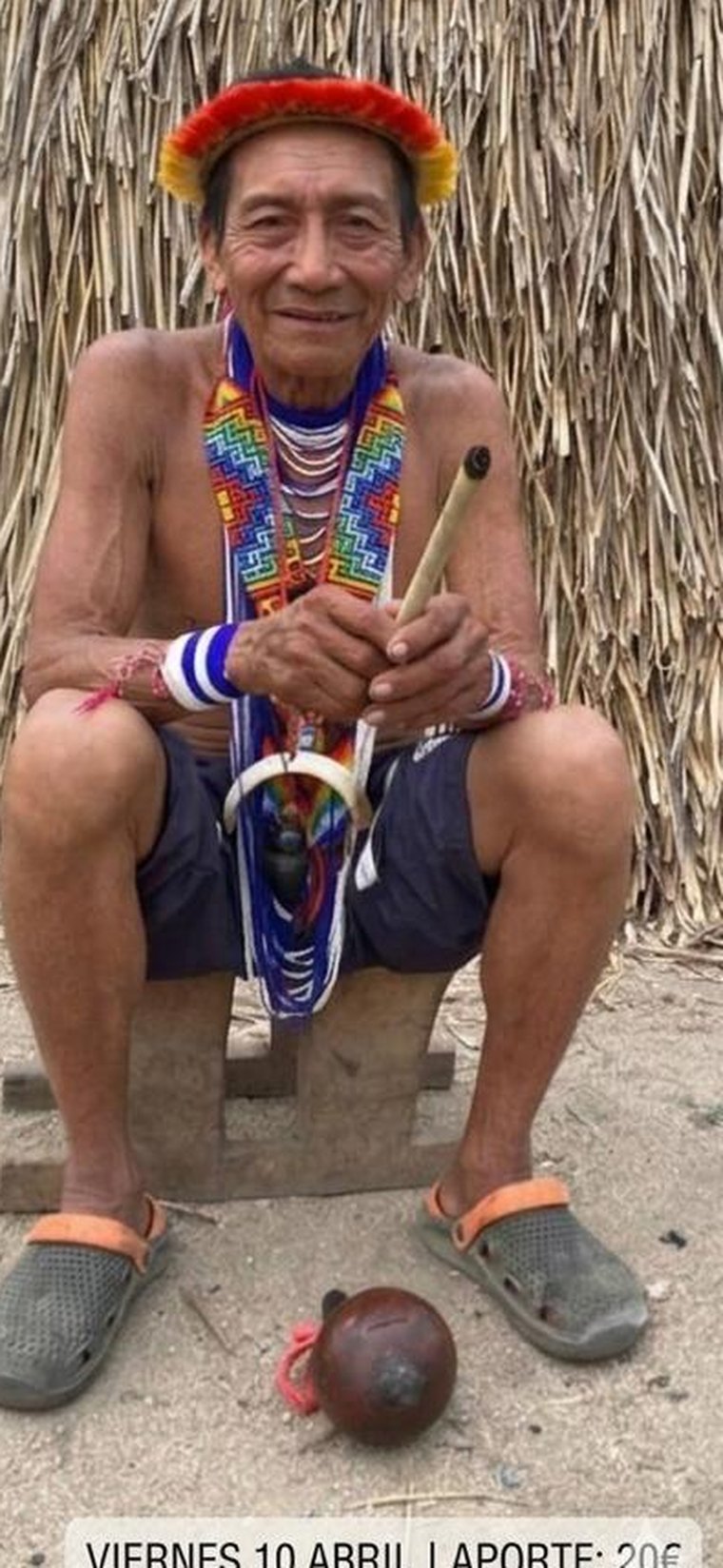
La ñua se toma en círculo, de noche, guiada por quien guarda el canto:The ñua is taken in a circle, at night, guided by the keeper of the song:
Las ceremonias de ñua se realizan con aprendices del Abuelo Rufino, con su permiso y su enseñanza. Cada encuentro ayuda a la comunidad Huöttöja a mantener viva su cultura.The ñua ceremonies are held with apprentices of Grandfather Rufino, with his permission and teaching. Every gathering helps the Huöttöja community keep its culture alive.
 CHAMOÏ